How to Explain a Career Gap or Backlog on Your Fresher Resume (2026 Guide)

TL;DR
Gaps and backlogs are common — most recruiters have seen dozens of them and are more interested in how you handled the time than the gap itself.
Never leave a gap unexplained. Silence reads worse than almost any honest explanation.
Keep it brief on the resume — one line is enough. Save the full story for the interview.
Frame the gap around what you did, not what happened to you: skills learned, projects built, certifications completed, responsibilities carried.
Backlogs specifically should be addressed with facts (cleared status, current CGPA trend) rather than left for the recruiter to assume the worst.
Use a resume builder with flexible section ordering so you can place "Additional Learning" or "Projects" sections strategically around the gap.

Introduction
If you're a fresher with a career gap or a pending academic backlog, you've probably stared at your resume wondering whether to explain it, hide it, or just hope nobody notices. Here's the reality: recruiters will notice. What they're actually evaluating isn't whether the gap exists — it's whether you can talk about it clearly, honestly, and without panic. This guide covers exactly how to handle both academic backlogs and time gaps on a fresher resume, with wording you can use directly.
Part 1: Understanding Why Recruiters Care About Gaps and Backlogs
Recruiters aren't scanning for a "perfect" academic record. They're scanning for two things:
Consistency — does the story you're telling add up?
Self-awareness — can you own the situation without over-explaining or getting defensive?
A gap or backlog isn't disqualifying on its own. An unexplained one — or one you seem uncomfortable discussing — raises more questions than the gap itself ever would.
Part 2: How to Explain an Academic Backlog on Your Resume
A backlog (a failed or pending subject that needs to be cleared) is one of the most fresher-specific concerns — and one of the easiest to over-explain.
What to Do
State the status factually, without excessive apology: "1 backlog (Semester 4) — cleared in [Month/Year]" or "1 pending backlog, scheduled for clearance in [Month/Year]."
Show your CGPA trend if it's improving — an upward trend after the backlog semester tells a stronger story than the CGPA number alone.
Keep it to the education section only. Don't repeat the explanation elsewhere on the resume.
Never list the subject name or reason ("failed due to family issues") on the resume itself — that level of detail belongs in an interview, if asked at all.
Sample Wording
B.Tech, Computer Science — XYZ University (2022–2026) CGPA: 7.8/10 (1 backlog, Semester 3 — cleared, Semester 6)
If the Backlog Is Still Pending
CGPA: 7.4/10 (1 backlog, Semester 5 — clearance scheduled [Month/Year])
This is honest, specific, and doesn't invite speculation.

Part 3: How to Explain a Career or Time Gap on Your Fresher Resume
For freshers, "gaps" usually fall into a few common categories: a delayed graduation, a year lost to health or family circumstances, an unsuccessful placement season, or time spent self-studying or freelancing without a formal role.
The Golden Rule
Fill the gap with what you did, not what happened. Recruiters respond far better to "I used this time to build X" than to a justification for why the time was "lost."
Common Gap Scenarios and How to Frame Them
Situation | Resume Framing |
Gap year after 12th/delayed admission | "Gap Year (2023–2024): Completed [certification/course], built [project]" |
No placement in campus drive | "Self-Directed Learning (2025): Completed [certification], built 2 portfolio projects in [skill]" |
Health or family reasons | "Personal Sabbatical (2024–2025)" — one line, no elaboration needed on paper |
Freelance/informal work during the gap | List it as actual experience: "Freelance [Role], [Year–Year]" — freelancing counts as experience |
Where to Place It
Add a short "Additional Learning", "Career Break", or "Self-Directed Projects" section in chronological order with your education/experience — don't bury it in a footnote or leave a visible blank date range.
Part 4: What to Say in the Interview (Even Though It's Not on the Resume)
The resume only needs to open the door — the interview is where you close the loop:
Lead with the outcome, not the difficulty. "I used that year to strengthen my fundamentals through [specific action], which is part of why I'm confident applying for this role now."
Keep it to 20–30 seconds. Over-explaining signals insecurity about the gap more than the gap itself does.
Redirect to relevance. Tie whatever you did during the gap back to a skill relevant to the job.
Don't apologize repeatedly. State it once, factually, and move on.
Common Mistakes to Avoid
Leaving a visible date gap with no explanation anywhere on the resume.
Over-justifying with personal details that aren't necessary for a hiring decision.
Listing the backlog subject name or number of attempts.
Using vague filler like "utilized time for self-growth" with no specifics.
Bringing up the gap unprompted and dwelling on it in the interview.
FAQ
Should I mention a backlog on my resume at all?
Yes. Omitting it can look worse if it surfaces later during document verification. A single factual line — cleared or pending — is enough.
Will a gap year hurt my chances as a fresher?
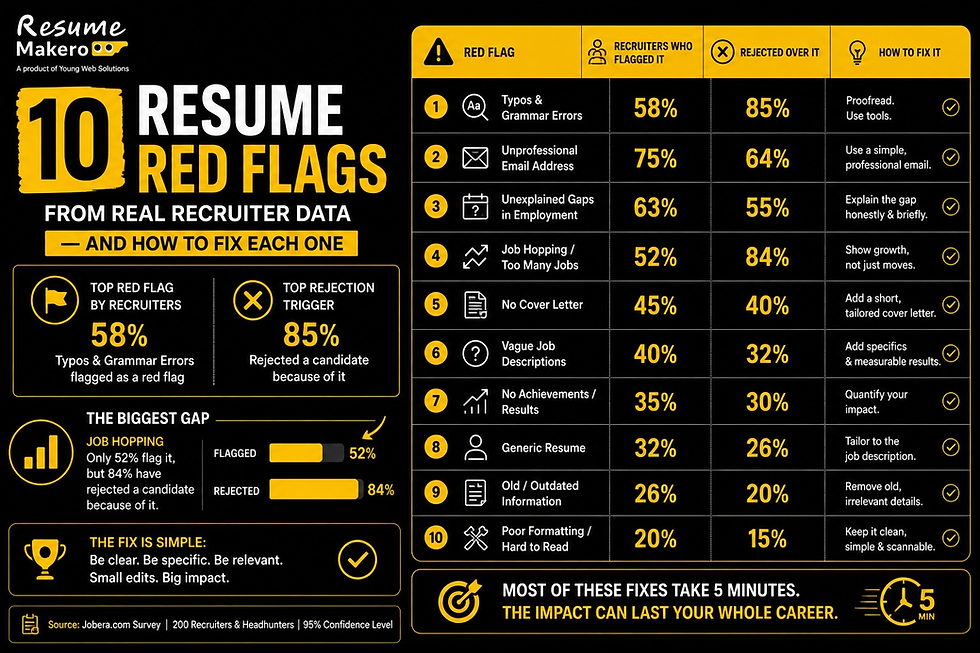
Not if it's explained with what you did during that time. Recruiters are far more concerned with unexplained gaps than gaps with a clear, productive story attached.
How much detail should I give about a personal or health-related gap?
Very little on the resume — a neutral label like "Personal Sabbatical" is sufficient. Save further detail for the interview only if you're comfortable sharing it, and only if asked.
Does freelancing during a gap count as work experience?
Yes. List it as an actual role with dates, responsibilities, and outcomes — it demonstrates initiative during the gap rather than idle time.
What if I have multiple backlogs?
State the total number and current status factually (e.g., "3 backlogs, all cleared as of [Semester]"), and be prepared to briefly explain your recovery trend in the interview if asked.
Should I explain the gap in my cover letter too?
Only briefly, and only if the gap is recent or likely to raise an immediate question. One sentence framed around what you gained is enough — the resume and interview do the heavier lifting.
Don't let a gap or backlog hold your resume back. Build a clean, ATS-friendly fresher resume for free — no sign-up, no watermark.