How to Introduce Yourself Professionally: Examples for Interviews, Meetings, and Every Situation In Between
You're sitting in a waiting area outside an HR cabin, and the recruiter finally calls your name. Before you've even sat down properly, she says, "So, tell me about yourself."
Your mind goes blank for half a second. Then out comes the same line you've said in every group discussion since your second year of college: "I am from a middle-class family, I did my B.Tech in Computer Science, and my hobbies are reading and cricket."
She nods politely. But you can tell — that answer didn't land.
This happens to almost everyone, and it's rarely because you lack achievements. It's because nobody ever taught you how to introduce yourself professionally in a way that actually holds attention. School and college reward you for reciting facts about yourself.
The job market rewards you for making someone care about those facts in the first ten seconds.
This guide fixes that. You'll get a simple, repeatable framework, real scripts for interviews, HR rounds, placement drives, virtual calls, networking events, and your first day at a new job, plus the small habits that quietly make people sound unsure of themselves.
TL;DR
Interviewers form an early impression fast, so a rehearsed or vague self-introduction works against you before the real questions even start.
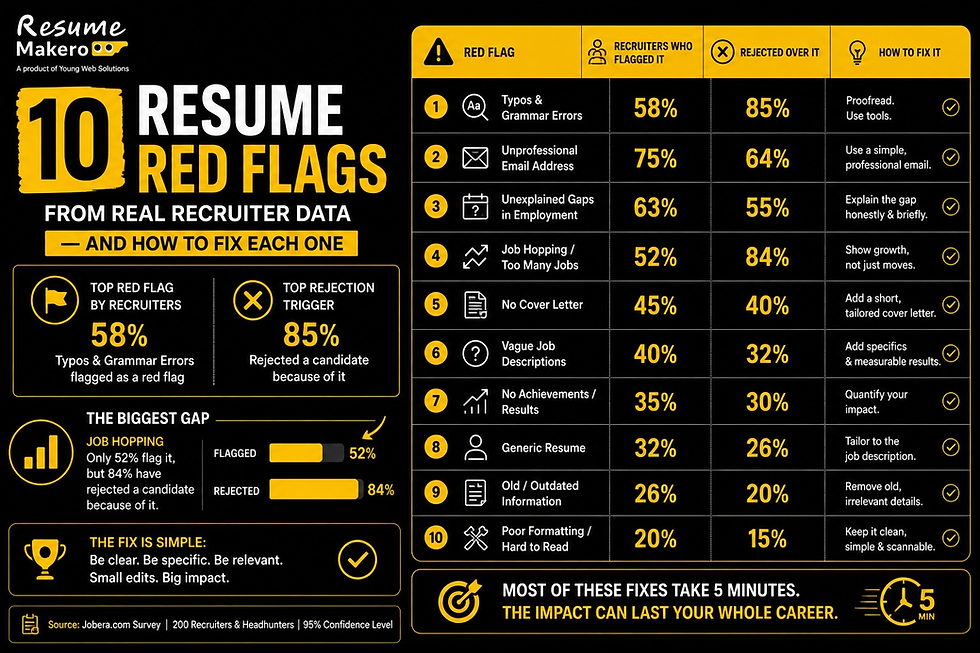
Use the Anchor-Story-Bridge framework: who you are now, one relevant proof point, and a line connecting it to why you're there.
Adjust the Story for each situation — HR rounds want cultural fit, technical rounds want proof of skill, networking events want a conversation opener.
Avoid memorizing word-for-word, listing your full history, or speaking too fast out of nerves.
Keep interview introductions to 60–90 seconds; casual ones under 20 seconds.
Why How You Introduce Yourself Professionally Changes the Outcome Before You Even Answer the First Question
Recruiters and interviewers form an early impression within the first few minutes of meeting a candidate, and that impression tends to color how they interpret everything said afterward. This is sometimes called the primacy effect — the human brain gives disproportionate weight to whatever it hears first, then spends the rest of the conversation looking for evidence to confirm it.
That's why "tell me about yourself" is rarely a throwaway question. It's the moment an interviewer decides whether to lean in or lean back. A flat, memorized answer signals that you haven't thought about what you actually bring to the table. A clear, specific one signals the opposite — that you understand your own value and can communicate it without rambling.
The good news: this isn't a personality trait some people are born with. It's a structure you can learn.
The Anchor-Story-Bridge Framework for a Professional Introduction
Most people either say too little ("I'm a mechanical engineer") or too much (their entire academic history since Class 10). The fix is a three-part structure that keeps your introduction focused and easy to follow.
1. Anchor — Who You Are, Right Now
Start with your name and your current position in one breath: your role, your year of study, your specialization, or the project you're currently working on. This gives the listener context before you say anything else.
2. Story — One Piece of Relevant Proof
Pick a single achievement, project, internship, or skill that's relevant to the room you're standing in. Not three. Not five. One. The goal isn't to list your whole resume out loud — it's to give one concrete reason to believe you're capable.
3. Bridge — Connect It to What Happens Next
Close by linking your intro to the reason you're both in that room: the role you're interviewing for, the project the team is starting, or what you're hoping to learn or contribute. This is the line that turns a self-introduction into a conversation starter instead of a monologue.
Example using Anchor-Story-Bridge:
"Hi, I'm Ananya, a final-year Computer Science student. During my internship at a fintech startup, I built a dashboard that cut the support team's ticket-resolution time by almost 30%. I'm looking for a role where I can keep working on real product problems like that one."
Three sentences. No filler. Notice how differently that lands compared to reciting a hobbies list.
Quick pause here. If your self-introduction is strong but your resume doesn't back it up with the same clarity, an interviewer will notice the gap. Resume Makero's resume builder gives you ATS-friendly templates and ready-made bullet points, so the story you tell out loud matches the story on paper — no sign-up required to get started.
How to Introduce Yourself Professionally in a Job Interview
"Tell me about yourself" is really asking, "Why should I keep listening to you for the next 30 minutes?" Keep your answer under 60–90 seconds and stay tightly relevant to the job.
Example:
"I'm Rohan, and I've spent the last two years working as a data analyst at a logistics company, mostly building reports that helped the operations team cut delivery delays. Before that, I did my MBA in Business Analytics. I'm applying here because your team works heavily with supply chain data, and that's exactly the kind of problem-solving I enjoy most."
Notice the Anchor (current role), Story (one measurable win), Bridge (why this company, specifically).
How to Introduce Yourself in an HR Round
HR rounds often test communication and cultural fit more than technical depth, so keep it warm and a little more personal, without drifting into unrelated details.
Example:
"I'm Priya. I've been working as a content writer for a year and a half, and what I enjoy most is turning complicated topics into something people actually want to read. Outside work, I run a small book club with a few friends, which has honestly made me better at explaining ideas simply. I'm looking for a role where I can grow into a content strategy position eventually."
How to Introduce Yourself in a Campus Placement or Internship Interview
Without full-time work experience yet, lean on academic projects, internships, competitions, or positions of responsibility — anything that shows initiative.
Example:
"Hi, I'm Aditya, a third-year Electronics student at [college name]. Last semester, I led a team of four in building a low-cost water quality sensor for our final year project, which we presented at our department's tech fest. I'm hoping to apply that same hands-on problem-solving in a core engineering internship this summer."
How to Introduce Yourself on a Phone or Virtual Interview
Without body language to help you, your tone and pacing carry more weight. Speak slightly slower than feels natural, and mention your location briefly if you're joining from a different city than the office, since it sets useful context.
Example:
"Hi, this is Neha. I'm joining from Nagpur — I currently work as a graphic designer for a small D2C brand, handling everything from packaging to social media creatives. I saw this role focuses more on brand strategy, which is the direction I've been wanting to grow in."
How to Introduce Yourself Professionally at a Networking Event
Networking introductions should invite a follow-up question, not close the conversation. End with something the other person can respond to.
Example:
"Hi, I'm Karan — I work in digital marketing, mostly on the performance side for D2C brands. I'm here because I'm curious how other people are handling rising ad costs this year. What field are you in?"
How to Introduce Yourself to a New Team on Your First Day
New-team introductions should be short, friendly, and low on jargon the team hasn't heard yet. Nobody's evaluating you here — they're just trying to remember your name and what you do.
Example:
"Hi everyone, I'm Simran, the new associate joining the design team. I'll mostly be working on the mobile app redesign with [manager's name]. Happy to grab coffee with anyone this week — feel free to say hi!"
How to Introduce Yourself in a Meeting or Presentation
In meetings, your introduction should orient people quickly: your name, your role, and why you're relevant to the topic at hand.
Example:
"I'm Vikram from the operations team. I've been tracking our vendor delays over the last quarter, and I'll be walking you through what's causing them and a couple of options to fix it."
One more thing before we move on. If a hiring manager likes your introduction, the next thing they'll ask for is your resume and often a cover letter. Resume Makero's cover letter builder helps you keep that same clear, specific tone in writing, and its free AI review flags generic phrasing before a recruiter ever sees it.
7 Mistakes That Make Your Self-Introduction Sound Rehearsed (or Forgettable)
Starting with your hobbies before your relevant experience. Save personal details for later in the conversation, once context is established.
Listing your entire academic history. Nobody needs to hear about Class 10 boards in a job interview. Stay in the last two to three years.
Memorizing it word-for-word. A script recited too perfectly sounds like a script. Know your key points, not your exact sentences.
Speaking too fast because you're nervous. Interviewers read nervous speed as under-preparation, even when the content is strong.
Ending without a bridge. If your introduction doesn't connect to why you're there, it feels like a monologue instead of a conversation opener.
Undervaluing your achievements with hedging language. Phrases like "I just did a small project" shrink real work. Say what you did, plainly.
Copying someone else's introduction word-for-word. What worked for a friend in a different role may not fit your story. Adapt the framework, don't clone the script.
A Quick Checklist Before You Walk In
Anchor: name + current role or year, stated in one line
Story: one relevant, specific proof point — not three
Bridge: a line connecting it to this interview, meeting, or event
Under 90 seconds for interviews, under 20 seconds for casual introductions
No memorized script — know the points, not the exact words
Practiced out loud at least twice, not just in your head
Related Guides
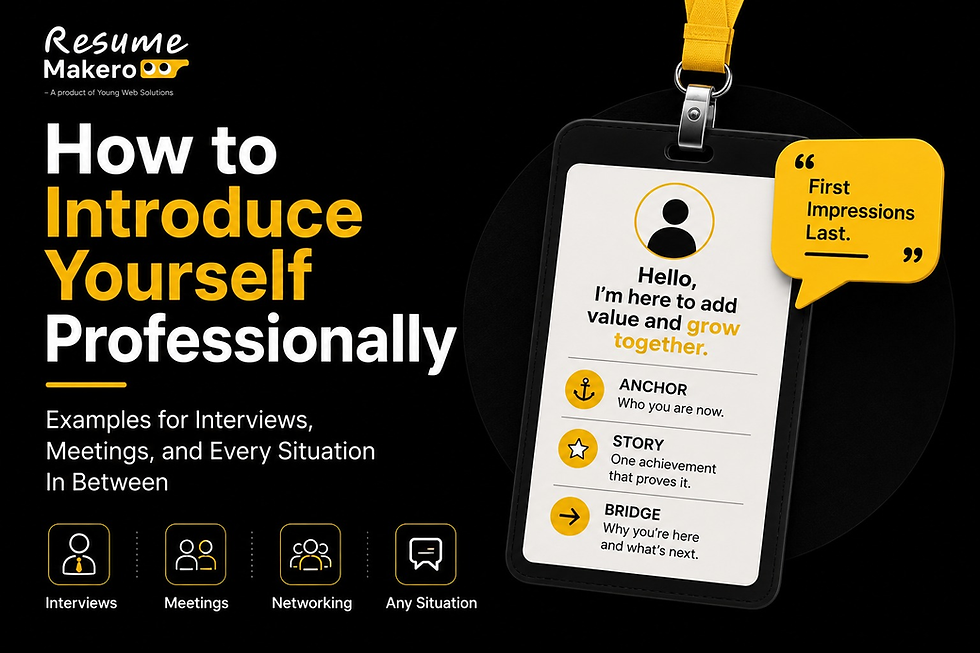
Your introduction doesn't begin in the interview—it begins with the application that gets you there. Before practising your introduction, make sure your resume highlights your strengths and your cover letter explains your story.
You may also find these guides useful:
How to Write a Cover Letter
How to Crack an Interview and Use Your CV to Make a Strong First Impression
Frequently Asked Questions
1. How do I introduce myself professionally if I have no work experience? Use an academic project, internship, competition, or leadership role instead of a job title. Pick one specific outcome — a project you led, a paper you presented, a fest you organized — and use it as your "Story" instead of work experience.
2. What should I avoid saying when introducing myself in an interview? Avoid your full family background, your entire school history, and generic lines like "I am a hardworking and dedicated individual." Interviewers hear these constantly, and they don't tell them anything specific about you.
3. How long should a self-introduction be in a job interview? Aim for 60–90 seconds. Long enough to cover your Anchor, Story, and Bridge; short enough that the interviewer stays engaged and gets to ask their next question.
4. How do I introduce myself confidently if I get nervous easily? Confidence in delivery matters as much as the words themselves. Practice out loud, not silently in your head, and slow your pace down slightly — nervousness usually speeds people up without them realizing it.
5. Should my self-introduction change for HR rounds versus technical rounds? Yes. HR rounds usually want to see communication and cultural fit, so a slightly warmer, more personal Story works well. Technical rounds want to see problem-solving ability, so lean on a specific technical project or skill instead.
6. How do I introduce myself in a virtual or phone interview? Speak a touch slower than feels natural, since tone carries more weight without visual cues. Mention your city briefly if you're joining remotely, and keep background noise to a minimum before you start.
7. What's a good way to end a self-introduction? End with a Bridge line that connects your background to the reason you're in that conversation — the role, the meeting's topic, or what you hope to learn. This turns your introduction into a natural opening for dialogue instead of a closed statement.
Next Steps
Write out your own Anchor-Story-Bridge introduction today, say it out loud twice, and time it. If it runs past 90 seconds, cut it down to one Story point instead of two or three. Once your spoken introduction is sharp, make sure your resume tells the same focused story — a recruiter who liked how you introduced yourself will look for that same clarity on paper next.
Ready to match your introduction with a resume that backs it up? Build a free, ATS-friendly resume with Resume Makero in minutes — no sign-up required, and your data stays private.