Resume Tips for Commerce/B.Com Graduates Applying to Finance Roles

Reading Time
11 minutes
TL;DR
If you're a B.Com graduate applying for finance roles, your resume is competing against hundreds of near-identical ones — same degree, same "good communication skills," same objective statement nobody reads. The fix isn't a fancier template. It's specificity: show numbers, tools, and outcomes instead of adjectives. This guide covers how ATS systems actually filter commerce resumes, what recruiters at Big 4 firms and corporate finance teams look for, the exact keywords and skills to include, mistakes that get B.Com resumes rejected in six seconds, and a free way to build an ATS-friendly resume without signing up for anything.
Key Takeaways
Recruiters and ATS software now filter B.Com resumes on specific skills (Tally, GST, Excel, SAP, Advanced Excel formulas) rather than just the degree name — list tools by name, not by category.
Most companies, including Fortune 500 firms, run resumes through applicant tracking software before a human ever opens them, so formatting mistakes can knock you out before your qualifications are even read.
B.Com freshers land roles across three real pathways in 2026 — Big 4 audit/article positions, IT-ITES finance operations (TCS, Infosys, Wipro, Cognizant), and SME/startup accounting roles — and each expects a slightly different resume emphasis.
Quantify everything possible: "managed accounts" means nothing; "reconciled 40+ vendor accounts monthly with zero discrepancy" means something.
A one-page, single-column, standard-font resume beats a "creative" template almost every time for finance roles, because ATS parsing and recruiter skimming both reward simplicity.
Table of Contents
Introduction
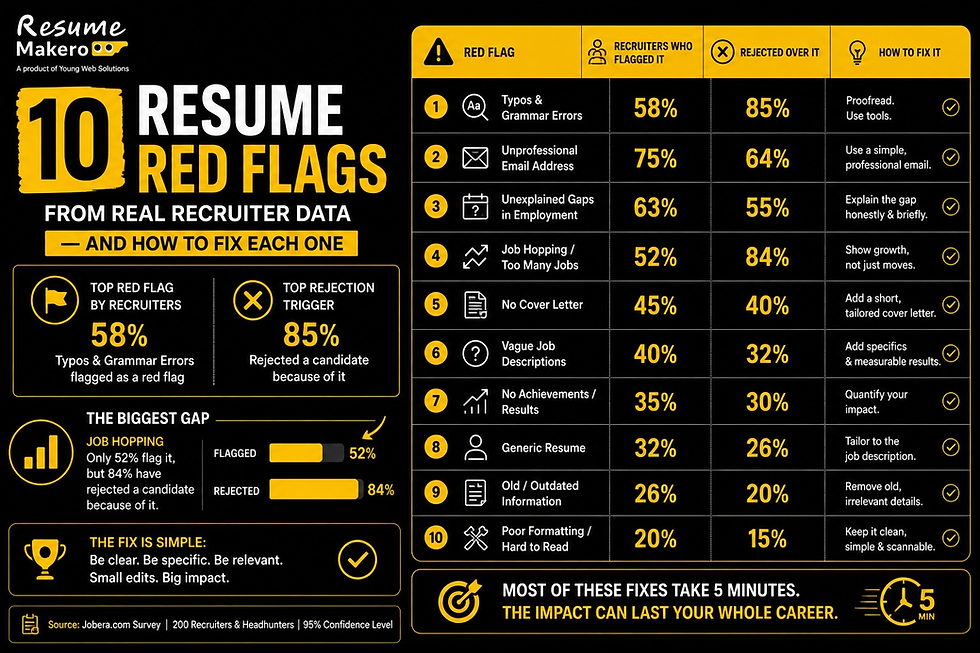
I've sat on the other side of the table for enough fresher hiring rounds to tell you something most career blogs won't: nobody is reading your resume for the first thirty seconds. They're scanning it. A recruiter with 200 applications open a Naukri or LinkedIn tab and a coffee going cold decides in about six to eight seconds whether your resume earns a second look. For B.Com graduates specifically, this is brutal, because your applicant pool looks nearly identical on paper — same core subjects, same "achieved 85% in Accountancy," same generic objective line about "seeking a challenging opportunity to utilize my skills."
The uncomfortable truth is that a Commerce degree alone doesn't differentiate you anymore. What differentiates you is whether your resume proves you can actually do the job — reconcile a ledger, build a pivot table, read a balance sheet, file a GST return — in language a recruiter and a piece of screening software can both understand instantly. This guide is built around that gap. No fluff, no "dare to dream" energy — just what actually gets a B.Com resume shortlisted for finance roles in 2026.

Why B.Com Resumes Get Rejected Before Anyone Reads Them
Three things sink a B.Com resume before it's even evaluated on merit:
It's a list of subjects, not a list of skills. "Studied Cost Accounting, Business Law, Income Tax" tells a recruiter what your syllabus was, not what you can do with it.
It uses the same five adjectives everyone else uses. "Hardworking," "team player," "quick learner" — these are the resume equivalent of white noise. Recruiters have stopped registering them.
It's not formatted for how it will actually be read — either by software first, or by a human skimming on a phone between meetings.
Recent hiring research backs this up directly. Industry data on recruitment technology shows that 75% of recruiters and hiring managers now use applicant tracking systems during the recruitment process, and separate analysis has found that nearly 99% of Fortune 500 companies run resumes through ATS platforms as a routine part of hiring. If you're applying to any mid-sized or large company — which most B.Com finance roles are — assume software reads your resume before a person does.
How ATS Actually Reads a Commerce Resume
An ATS isn't some mysterious AI judging your personality. It's parsing software that extracts text from your resume and matches it against the job description. Research from Jobscan's hiring surveys found that most companies use their ATS to actively rank and filter candidates a Harvard Business School study found that more than 90% of employers initially filter or rank potential candidates by criteria like skills, credentials, and years of experience before a recruiter ever opens the file. That same research found 76.4% of recruiters search and rank candidates specifically by skills pulled from the job description
Practically, this means:
ATS-friendly | ATS-risky |
Standard headings: "Experience," "Education," "Skills" | Creative headings: "My Journey," "What I Bring" |
Single-column layout | Multi-column or table-based layouts |
Standard fonts (Calibri, Arial, Georgia) | Decorative or script fonts |
.pdf or .docx as specified in job post | Image-based resumes, scanned PDFs |
Skills listed as plain text | Skills shown only as icons or graphics |
Exact tool names (Tally, SAP, MS Excel) | Vague phrases ("accounting software") |
If your resume was designed in a heavily graphic-first tool, there's a real chance the parser reads your carefully designed layout as a jumbled block of text — sidebar content merging into your work experience, dates disappearing, skills sections vanishing entirely. This is why finance and accounting resumes in particular should lean simple over stylish.

What Finance Recruiters Are Actually Scanning For
Once your resume clears the software, a human takes over — and finance recruiters scan for a fairly consistent set of signals, regardless of whether the role is at a Big 4 firm, an IT-ITES finance operations team, or a small accounting practice:
Tool fluency — Excel (specifically: VLOOKUP, pivot tables, macros if you have them), Tally, SAP, Zoho Books, QuickBooks
Numeracy proof — internships, projects, or coursework where you actually worked with real numbers, not just studied theory
Compliance exposure — GST filing, TDS, basic direct/indirect tax knowledge, especially relevant given that GST compliance work has become a steady source of fresher demand since GST return filing became mandatory for businesses above the turnover threshold
Certifications in progress — CA Articleship, CMA, ACCA, or even a completed NCFM/NISM module signals seriousness
Communication ability — for client-facing or reporting-heavy roles, evidence you can write and present, not just calculate
The B.Com Resume Framework That Works
Use this structure top to bottom. It's boring on purpose — boring is what gets parsed correctly and skimmed quickly.
1. Header — Name, phone, email, city, LinkedIn (if active), and one line under your name stating your target role, e.g., "Aspiring Financial Analyst | B.Com (Hons.)"
2. Professional Summary (2–3 lines, not an "objective") — Skip "seeking a challenging role." Instead: "B.Com graduate with hands-on experience in GST filing and Tally ERP through a 3-month internship at [firm]. Proficient in Advanced Excel and financial statement analysis."
3. Skills — 8–12 specific, scannable skills (see next section)
4. Experience / Internships — Reverse chronological, 3–4 bullet points per role, each starting with an action verb and ending with a measurable outcome where possible
5. Education — Degree, college, university, year, percentage/CGPA (include if 70%+ or if the job post asks for a cutoff)
6. Certifications & Projects — Anything from NISM, NCFM, Coursera finance courses, or a college project involving real financial data
7. Additional / Achievements (optional) — Olympiads, case competitions, college fest finance roles (yes, being your college fest's treasurer counts — it shows you handled real money and real accountability)
Skills Section: What to Include (With Examples)
Don't write "Accounting" as a skill. Write the actual tool or method. Here's the difference:
Vague (avoid) | Specific (use) |
Accounting knowledge | Tally ERP 9, GST return filing (GSTR-1, GSTR-3B) |
Good with numbers | Advanced Excel (VLOOKUP, Pivot Tables, HLOOKUP) |
Financial skills | Financial statement analysis, bank reconciliation |
Software skills | SAP FICO (basic), Zoho Books, QuickBooks |
Communication | Client reporting, MIS report preparation |
If you genuinely have zero tool exposure yet, that's fixable before you apply — most of these (Tally, basic Excel, GST fundamentals) have free or low-cost short courses you can complete in a couple of weeks and list under Certifications.
Three B.Com Career Paths and How to Resume for Each
Not every B.Com resume should look the same, because the entry points differ. Based on current fresher hiring patterns in India:
Path 1: Big 4 / CA Firms (Audit Associate, Article Assistant)
Big four firms including EY, Deloitte, KPMG, and PwC India collectively bring in thousands of B.Com and CA fresher and intern candidates every year, mostly through structured article and fresher-associate intake. Emphasize: accounting fundamentals, attention to detail, any CA-track progress, and audit or bookkeeping exposure.
Path 2: IT-ITES Finance Operations (TCS, Infosys, Wipro, Cognizant, HCL)
These companies run structured, high-volume hiring programs for non-engineering graduates and hire B.Com graduates specifically into finance operations, accounts payable, and business analyst tracks — usually gated by an aptitude test (like TCS iON NQT) and a minimum aggregate cutoff. Emphasize: process orientation, Excel proficiency, and any exposure to ERP systems, since these roles are process-heavy rather than analysis-heavy at entry level.
Path 3: SME Accounting / Startup Finance
Smaller firms and startups often need someone who can independently handle bookkeeping, GST, and vendor payments from day one. Emphasize: independence, GST/Tally fluency, and willingness to own the full accounting cycle rather than one narrow piece of it.

Before/After: A Real Bullet Point Rewrite
Before: "Responsible for handling accounts and helping with day to day finance work during internship."
After: "Reconciled 30+ vendor invoices monthly and assisted in GSTR-1 filing during a 3-month internship at [Firm Name], reducing invoice mismatch errors by identifying discrepancies before month-end close."
Notice what changed: a number, a specific task, a tool/process name, and an outcome. That's the whole formula. Every bullet on your resume should try to hit at least two of those four elements.
Common Mistakes B.Com Freshers Make
Listing subjects as skills. "Studied Auditing" is not a skill. "Assisted in a mock audit project analyzing financial statements" is.
No internship, so leaving experience blank. Instead, use a "Projects" section — a college project analyzing a company's annual report, a stock market simulation, a tax-filing case study — anything hands-on.
Objective statements that could apply to any job at any company. If you can copy-paste your summary into a completely unrelated resume and it still makes sense, rewrite it.
Two-page resumes for freshers. Unless you have 3+ years of relevant experience, keep it to one page.
Ignoring the job description's exact keywords. If the post says "GST compliance" and you wrote "tax knowledge," you may not match on an ATS keyword search even if you mean the same thing.
Generic file names. "Resume_final_final2.pdf" looks careless. Use "FirstName_LastName_Resume.pdf."
Founder Notes
A pattern I've seen repeatedly with commerce freshers: they undersell genuinely relevant experience because they don't think it "counts." Managing your college fest's budget, helping your family's small business track GST, tutoring juniors in accountancy — these are real signals of financial responsibility and should be on the resume, framed properly, especially if you don't have a formal internship yet. Recruiters aren't only looking for prior job titles; they're looking for evidence you've handled real numbers and real responsibility before. Don't leave that evidence out because it wasn't a "real job."
Try It Yourself
If you want to put this framework into practice without wrestling with Word formatting or worrying about a paywall halfway through, ResumeMakero lets you build an ATS-friendly resume for free — no sign-up, no login, and no watermark on the download. Add your details, pick a clean template built for exactly this kind of scanning, and download it as a PDF in a few minutes. It's a genuinely free alternative for students and freshers who don't want to hit a paywall three steps before the download button.
FAQ
Q1: Should a B.Com fresher resume be one page or two?
One page, almost always. Recruiters spend seconds per resume; a second page for a fresher usually gets skipped rather than read.
Q2: Do I need a CA or CFA to get a good finance job as a B.Com graduate?
No. Alternate certifications like CMA, ACCA, or CFA can open similar doors, and many entry-level finance and accounting roles hire directly on practical skills like Tally, Excel, and GST knowledge rather than requiring a professional qualification upfront.
Q3: What if I have no internship experience at all?
Use a "Projects" or "Academic Projects" section instead — a financial statement analysis assignment, a mock audit, a stock portfolio tracking exercise, or even organizing finances for a college event all count as relevant, real-world proof.
Q4: Does resume design/color matter for finance roles?
Less than you'd think. Clean and simple consistently outperforms "creative" for finance and accounting resumes, both for ATS parsing and for recruiter skimming speed.
Q5: What's the biggest keyword gap in most B.Com resumes?
Specific tool and compliance terms — GST return types (GSTR-1, GSTR-3B), specific Excel functions, or ERP system names. "Accounting software" is too vague to match a keyword-based ATS search.
Conclusion
Your B.Com degree gets you into the applicant pool. Your resume decides whether you get pulled out of it. The gap between a resume that gets rejected in six seconds and one that gets shortlisted usually isn't talent — it's specificity: real tools, real numbers, real outcomes, formatted so both software and humans can actually read them. Fix those, and you're no longer competing on the same generic terms as every other Commerce graduate applying to the same finance role.
Sources
Jobscan, "2025 Applicant Tracking System (ATS) Usage Report" — jobscan.co
SelectSoftwareReviews, "Applicant Tracking System Statistics (Updated for 2026)" — selectsoftwarereviews.com
Geekflare, "Key Applicant Tracking System Stats You Need to Know [2026 Updated]" — geekflare.com
ResumeVera, "BCA and BCom Fresher Resume Examples 2026" — resumevera.com
Internshala, "Finance Fresher Jobs in Delhi NCR (2026)" — internshala.com